
Coffee packaging: the aroma stays inside.
Oxygen, light and moisture quickly rob coffee of its aroma. The packaging decides how long it lasts.
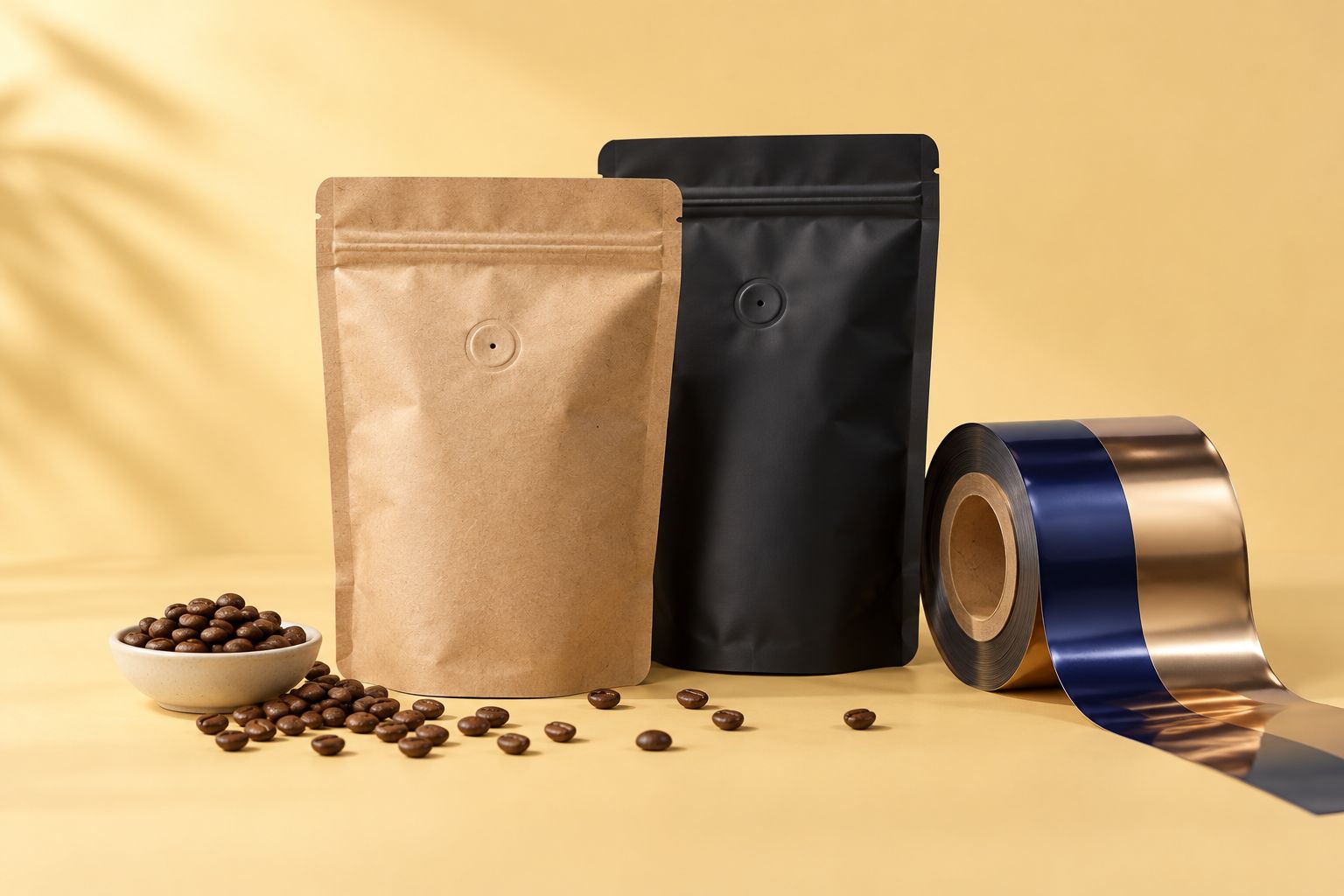
What the pack must do
- Oxygen barrier: slows the oxidation of oils and aromas.
- Barrier to light and water vapour.
- Retain the coffee aromas and keep out external odours.
- Manage the CO2 from freshly roasted coffee: the degassing valve lets it out without letting air in.
Formats
- Beans and ground coffee: bags with valve, from film on reels or pre-made.
- Capsules and pods: barrier films, wrappers and multipacks.
- Single-serve and gift packs, also with a folding carton.
Materials
Typical structures use aluminium or metallised films for high barrier; mono-material structures with specific barriers are used where recyclability is a priority. The choice is based on the required shelf life and the machine, with dedicated trials.
Who makes it: Poplast Group
Frequently asked questions
Why is a valve needed?
Freshly roasted coffee releases carbon dioxide: without a valve the bag swells. The one-way valve lets the gas out and does not let oxygen in.
Can coffee be packed in mono-material?
There are high-barrier mono-material structures designed for coffee. They must be tested on the product and against the required shelf life before replacing a structure with aluminium.
Faberpack, day by day
Packaging matters. Even when you pretend it doesn’t.
Words of the day (IT)
- #001Micron (µm)Materiali
Unità di misura dello spessore di film e fogli sottili: 1 µm è un millesimo di millimetro. Nel packaging flessibile ogni strato si indica in micron, e lo spessore incide su…
In the dictionary - #002Grammatura (g/m²)Materiali
Peso in grammi di un metro quadrato di carta, cartoncino, film o accoppiato. È il dato con cui si confrontano i materiali, si calcolano resa e peso dell'imballo e si verifica in…
In the dictionary
Today on LinkedIn
No posts yet.
Follow Faberpack on LinkedIn